
I drive up the narrow, white gravel driveway lined with vines searching for a sign of a building. I’m in Chapareillan, France, the Savoie AOP and IGP Isere designations for wine. I followed a combination of winding Google Map turns through tight village corners and signs pointing me towards Domaine des Crocs Blancs (Domaine of the White Fangs) along the hillside below the Mount Granier massif to end up here. The driveway opens up to reveal a plateau of vines and a collection of tractors, vats, and a few small buildings. A large Samoyed trots out to greet me and rubs its side against my leg. As I bend down to pet him, Kevin Foucher, the winemaker, pops out from behind a terracotta vat with a smile and a wave. Seeing his piercings, bright yellow and black circular glasses, and a slew of tattoos, I’m immediately at ease.
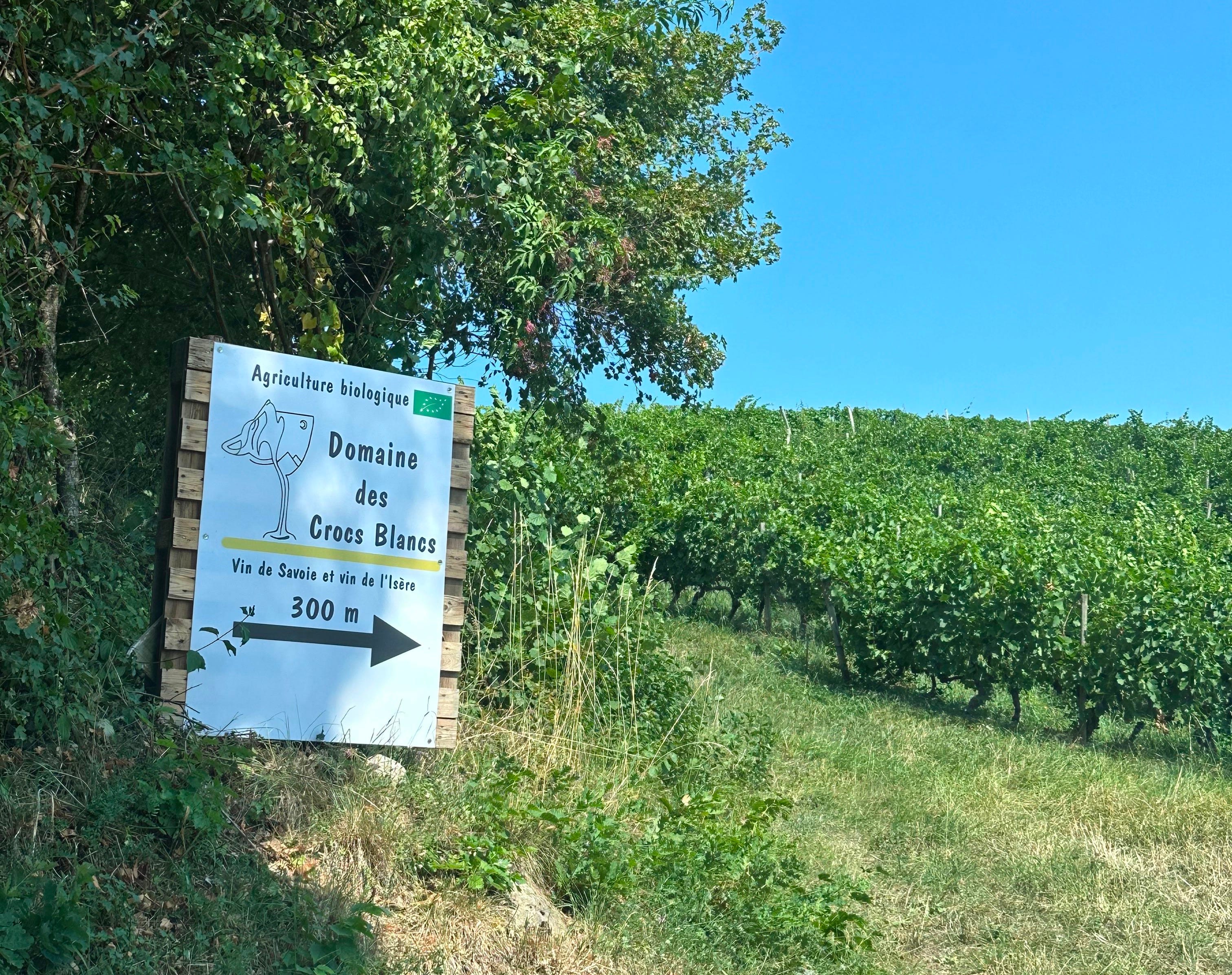
I try to find a small vineyard to visit each time we’re in Europe. While outdoor activities are the staple of these trips, finding unique local wines, for me, has become just as much of a tradition. I love discovering new and unique regional grapes and learning from each vintner. I often seek out unique producers, funky wines, and natural vines; I want the typical stuff of the area - just with a twist.
Through my googling and emailing about tastings in French, I think I’ve found my niche at Domaine des Crocs Blancs. Kevin and I talk in a mixture of mostly English with some French interspersed as we walk through the fermentation tanks. He tells me about the Italian, Chinese, and porcelain amphorae that he started using to add more interesting minerality to his wine. Minerality? My ears perk up.
Amphorae were ancient clay containers used to age, store, and transport wine up but fell out of use as Rome shifted towards oak barrels in the 1st century BC after contact with Gallic and Germanic tribes who used wood to store beer. Recently, natural wine producers have been shifting back to amphorae. They allow micro-oxygenation with the outside air, which creates a gentler fermentation and allows the natural characteristics of the grape to express itself. The words light, fruit forward, and elegant, are thrown around. Again - right up my alley.
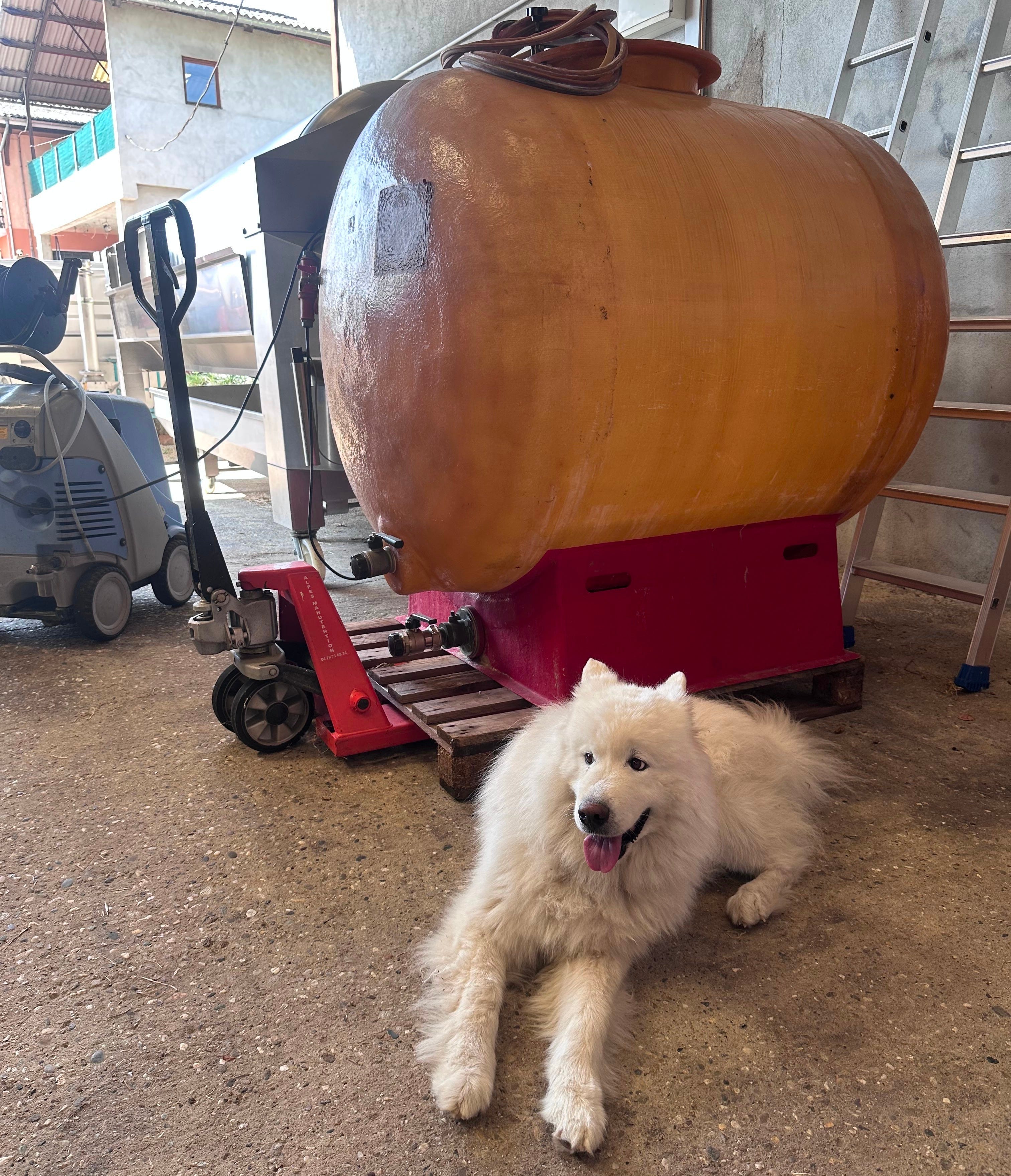
The winery itself is young, established in 2023, but the vines of the region are far from it. Vines have been cultivated in the Savoy region since the Allobroges, a Celtic group known as great warriors, lived in the valley at the start of the 4th century BC. The soil evolved into its modern makeup in 1248 when a massive landslide off of Mont Granier added more Cretaceous limestone into the clay.
I look up at Mont Granier as we walk from the warehouse of tanks into a small workshop lined with bottles. Kevin gestures for me to sit while he pulls out the wine. Do you want to try everything?
Everything? Sure.
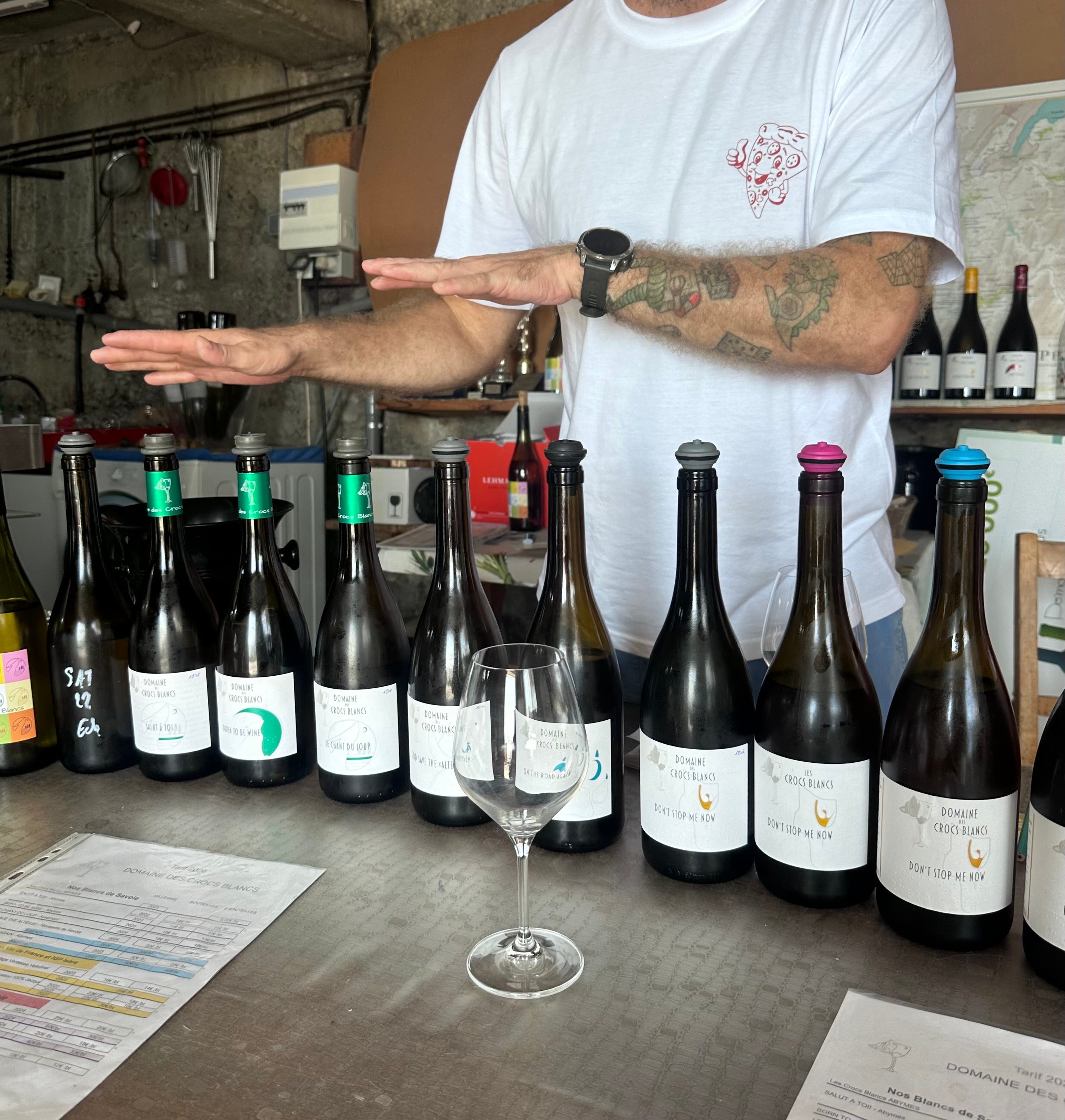
So he pulls out bottle, after bottle… after bottle … from a small wine cooler. 15 bottles to be exact. He plops down a dump bucket and, while I’m not usually one to waste wine, I know I’ll be using it today.
The first few bottles are a white grape called Jacquère - a staple of the region that I’d never tried before. I start with a bottle called Born to be Wine. On the website, the wine is described as “A mountainous plain, tall grasses swept by a spring north wind. A young woman in a yellow dress, hat on her head, silver hair, smiles at the wind.” Clearly Kevin is a poet. I love the wine - it’s fresh, crisp, full of green apples and a little bit of just cut grass.
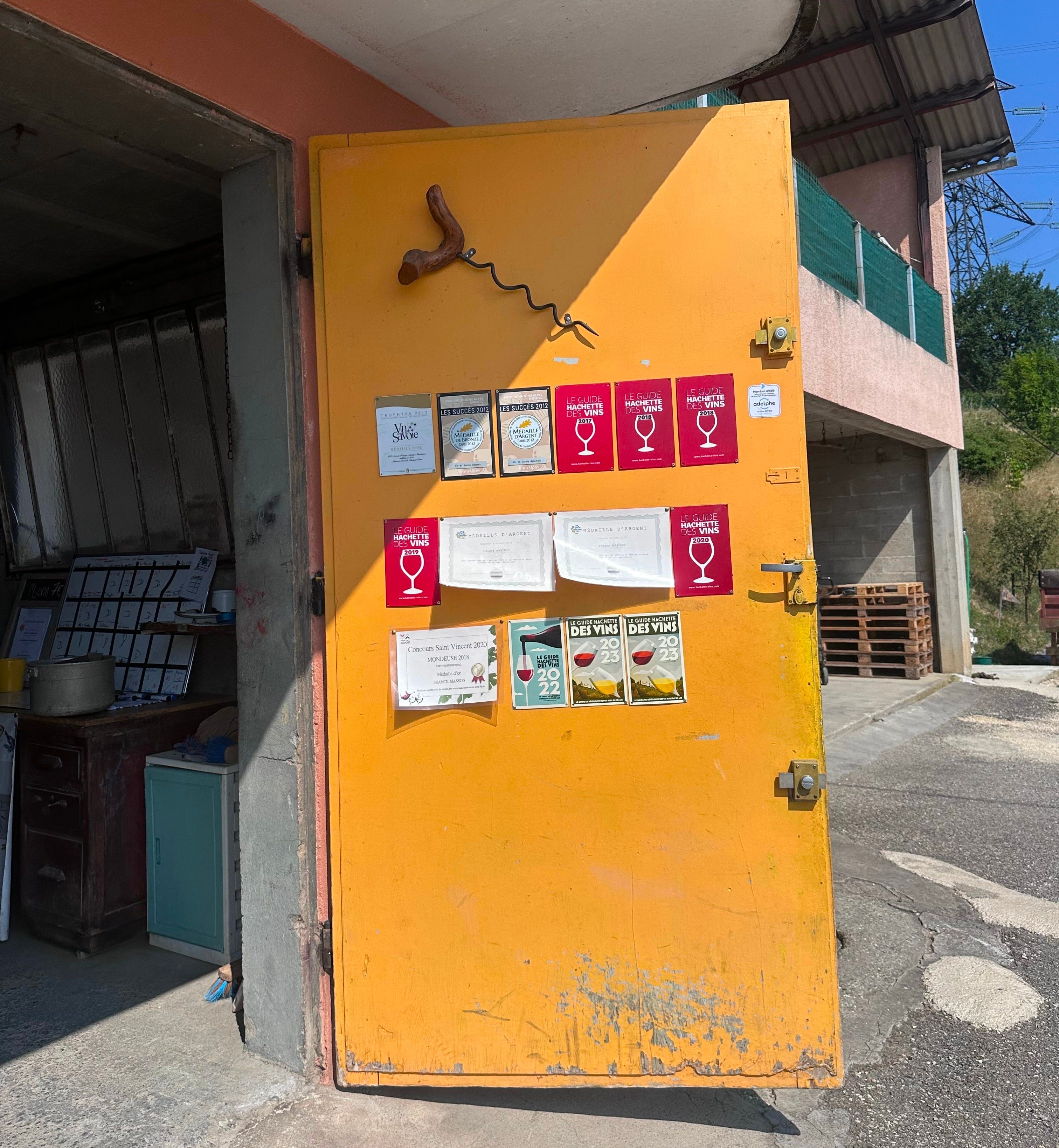
Next, he pulls out three different vintages of a bottle of Jacquère called Salut a Toi - 2022, 2023, 2024. The 2022 is round with a tinge of acidity thanks to a mixture of summer heat waves and rains. The 2023 is a slightly darker, fuller, rounder version of itself thanks to more mature grapes in prolonged summer heat. The 2024 is the lightest, freshest, and most acidic thanks to a cooler season.
I remark that I don’t think I’ve ever had a tasting where I tried several different vintages of the same wine. Kevin leans back into his chair and crosses his legs, examining and swirling the glass in his hand before setting it down.
This is my philosophy: I am a winemaker, not a chemist. I believe that each vintage should taste like itself, should taste different than the one before and the one after. A wine that tastes the same year after year is chemistry, not winemaking.
I pick up my glass again, put it to my nose for another smell, and then take a sip, sucking it between my teeth and swirling it around the palate before swallowing to respond.
I’d never thought of it like that but c’est vrai. It’s more about working with what nature gives you each year rather than fighting it.
He smiles and sits up a bit. Ouais, ouais. In this way, I think I know a grape or a wine and, every year, I am surprised. I learn something new about it. I meet it again.
We work through the rest of the line up: Altesse known for its citrusy-herb notes, rich skin contact (orange) wine with a range of hues made from Jacquère, Verdesse, and Velteliner. Funky and complex with notes of orange liqueur and spices and - this is a good thing - motor oil.
Shall we try the reds? He asks. I nod because, well, I’m here. While I appreciate red wine, I only really love specific types - gamay, pinot noir, pet nets, barberas - but I’m always down to try. He pulls out just two bottles - a Pinot Noir and Mondeuse. The Pinot Noir - described online as a sailboat ride on Lake Annecy, a voyage propelled by a north wind and the sun at its zenith - is a revelation. I could bathe in this Pinot Noir. I could go full Dionysus on this bottle and several others.
It is crisp and vibrant with a clear light vermillion hue. It has a taste similar to the fresh strawberries I often pick and eat straight from the vine at Stewart Farms in the April sun of South Carolina with the juice dribbling down my chin. I am not being hyperbolic when I tell him that this is the best pinot noir I’ve ever had. The Mondeuse is just as lovely - pepper, floral notes, blackberry - described online as “a red moon warming the starry sky.”
It’s almost always heart breaking because I inevitably fall in love with a bottle on these visits that I’ll never be able to access in the United States. I’ve been tempted to figure out a case but am always deterred by the cost of shipping.
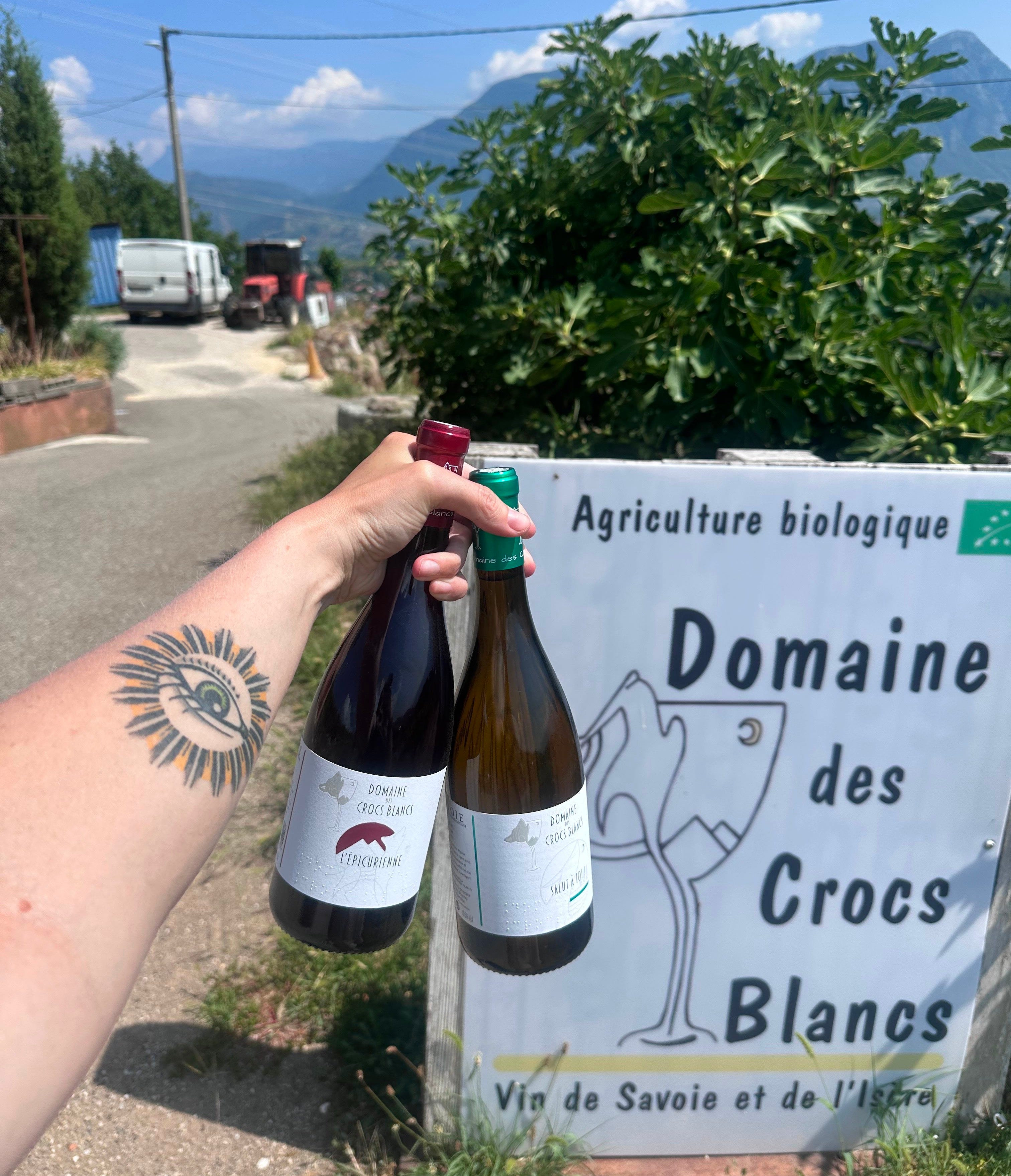
But I think that’s the beauty of it too, I reflect as I follow the winding roads of vine back to the main highway of the valley. Kevin’s commentary about each vintage as its own expression, never to be experienced again after it’s gone, reminds me that these moments are poignant because they are temporal, time bound, constrained. I wonder when consistency just becomes sameness, becomes boredom. The beauty of a trip like this, a wine that you may never have again, a cheese that you hiked several hours to have, is that it punctuates your equilibrium of routine. If I could have this pinot noir, everyday, I would soon become habituated to it, probably bored of it. I think that’s where the delight lives - not in the sameness but in the surprise, in the constraints and the circumstantial.
This is radical acceptance in a vintage of a bottle. The weather of the growing season comes, we say ok and we adapt. The weather of the harvest comes and we say ok and we adapt. In fermentation, the wine wants to do this and we say ok and we adapt. And when all the bottles of that vintage are gone, we say ok and let its new form bloom into being.